The frame with which you approach a situation will make a big difference to what you do and what happens. Here is another martial arts example.
There was once a martial artist who worked in the military. He trained hard, and was tough. he would also get into lots of fights. His frame in any situation was 'Am I the toughest person here?'.
This is a common attitude for people who have a skill that they are proud of.
I really appreciated this when chatting with a musician. I described an old internal dialogue of mine which went something like this 'Well he may be smarter/more charming/richer than me, but I could kick his ass in a fight!' He smiled as he listened and replied 'You know I do exactly the same thing, except I do not tell myself I can fight better, I tell myself I can play the trombone better.'
So when this martial artist walked into a bar he would eye up anyone he thought might pose some kind of threat in a fight. Not surprisingly many of these people were similar to him. Human animals being exquisitely tuned to non-verbal signals - especially those that suggest danger. The people he eyed up would perceive his presence as a threat. His attitude told them he was planning a fight, and they were the kind of people who were more than willing to oblige..
So there would be a fight, and someone would get hurt.
Many martial artists have a great capacity for re-framing fighting injuries as learning experiences by the way. They also use them as justification for training harder, being sneakier, more ruthless and hitting first so as to avoid further injuries (you can learn from someone else's injuries too).
One day this martial artist met a teacher who would change his life. The teacher gave him a different frame for his martial skills. Instead of being caught in the constant stress of 'Am I the toughest fighter here?' he offered him an alternative that meant that he did not have to prove and test himself at every occasion.
That frame is 'Everyone in this room is a little safer because I am here.' Now his martial arts training is about contribution, rather than survival.
So it is interesting to think what kind of frame you put on different situations. when the frame is around proving yourself, not making mistakes, maintaining distance,or not looking stupid then there is a good chance that you are in for a hard time.
Change the frame to how can I contribute, or how can I learn, or how can I have fun, then both the perception of the situation and your actions are likely to lead to a very different result.
Sometimes making a change is as easy as recognizing a destructive frame, and putting something more pleasurable in its place.
What are your favourite destructive frames? What would you like to change them with?
Some years ago I used to work as a personal trainer, and at the same time competed in full contact martial arts tournaments. Both of these activities required a level of fitness, especially the latter.
But however fit I wanted to be I knew that I couldn't train 24 hours a day, even if I was not training very hard.
To maximize the effects of my training I took another approach. I trained very intensely, then rested intensely.
What I told my clients with respect to exercise was this. You do not get stronger when you train, you get more tired and you get weaker. You get stronger when you rest, which is when the body adapts to the demands placed on it during training.
It applies when recovering between sets of an exercise during a session, as well as the periods between sessions. There are longer cycles of rest and recovery as well.
The same is true of non physical activities. Work too hard, do not rest and it results in burn out, and loss of effectiveness.
Many hard working people would like to be more productive. They try and fit more and more into the day, and cut out periods of rest. For many of the people I coach they benefit from keeping the rest periods, but improving the quality of relaxation.
Quality of relaxation is a skill. That is why so many people turn to Yoga and Taiji these days - to learn some of that quality. Breathing exercises and meditation are other ways to develop it.
Sometimes I catch myself half resting, half working, and not getting much done. I am making it a discipline to really go for my rest now, not even bother with a tea, but sit and relax. Sit and let go of everything. Maybe fall asleep for a few moments.
It is not always socially acceptable to do nothing, especially at work, but focused nothing is the purest form of rest, and can lead to the swiftest recovery. It may take some time to learn to relax deeply and quickly, but once developed it is a great ability.
There is a lovely Zen story that touches on this.
A master is lecturing the meditating monks 'If there is anything in your mind then throw it out.'
One young monk asks 'But what if my mind is already empty?'
'Then carry it out!' the master replies
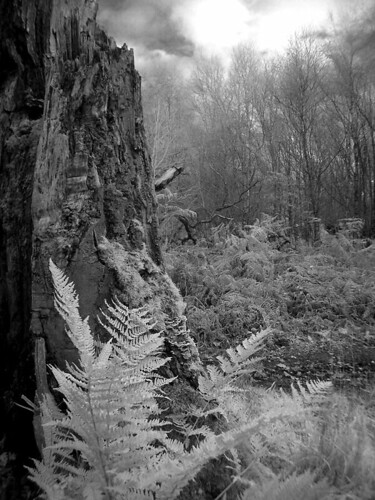
Daoist traditions use the image of being motionless, silent and inert like an old tree stump. Somehow that is an image that works for me, you can find what works for you. So stop now for a moment, still yourself, and how still are you now? What else can you let go of knowing that it will be there when you come back?
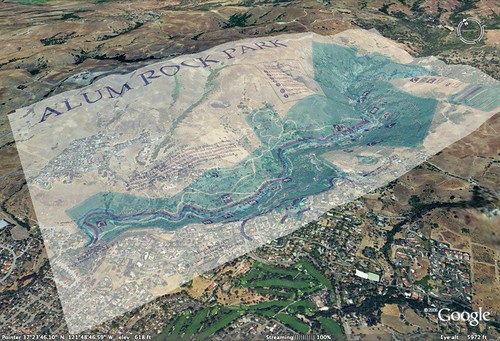
photo: Alum Rock Park Map - Google Maps Overlay by Victor Solanoy
A theme that I keep coming back to in NLP is a map is not the territory. It applies on all kinds of different levels, two friends chatting and not quite understanding each other, two cultures not getting on, to someone lost somewhere because they cannot read a map - literally.
As people take on this idea they leave the certainty that comes from the knowledge that 'Science proves' or that 'the scriptures say'. It is not always comfortable for them.
Probably the majority of people that I work with are either moving into this area of uncertainty, or are already there. There tends to be a progression in how people structure their world views, and the relativistic map is not the territory one is fairly advanced.
Once people pick it up then they can often cross cultures more easily, and work with people very different from themselves more elegantly.
One of the ways to develop this ability is to deliberately take on, learn, and at least temporarily believe different maps. On our trainings we teach different communication models for exactly this purpose. The different models contradict each other. All of them are useful, but which is right?
Jumping between maps and models is great intellectual exercise, and as an athlete I like all kinds of exercise. With time it develops a higher level capacity to notice similarities in structure as well as content.
Partly with this in mind I am developing a blogroll with links to other blogs. These blogs have styles and content which can be very different from this one (though for now they are all blogs). You may follow some of the links and like what you read, or you may hate it, or be scared by it or a combination of these and other emotions.
My question for you - especially if you do not like what you read is whether you can take on the opinions of the writers as if they were your own and therefore true?
You do not have to spend the rest of your life believing what you read, just be able to take something else on for a while.
I found this recently - I think it is a great illustration of how we filter information. Well it got me anyway! How do you think you will do....
It makes me wonder how many other pieces of information we miss in everyday conversations that might be important? What kind of states could we enter to start noticing what we missed before?
On courses at NLP School Europe we often teach a number of rapport exercises which involve mirroring the body of another person. Doing this on purpose can seem artificial, and done poorly it can be pretty creepy.
Having said that it is something that people who get on with each other do naturally most of the time. What we show is that you can do it more purposefully to expand the range of situations whee you can feel comfortable, communicate clearly and influence people.
Here is a link to a study from UCLA that used brain imaging to observe the effect that mirroring had on brain activity. Though it used a small sample size it scientifically validates the exercise. Also the study confirms my experience that using mirroring helps create empathy for the person with who is mirrored.
The greater the empathy and connection, the more likely you are to use any influence gained through technique to the positive benefit of all parties involved.
One universal human characteristic is the tendency to sort and organize our understanding of the world spatially. We are born into space and time, and our internal world is build around space and time too.
If you watch someone talking they will tend to gesture to where information and objects are in their imagination. Some of these gestures may be in corporal space - pointing to parts of the body when referring to emotions for example. Other gestures may refer to where they imagine events in the past or future to be, or to concepts that float somewhere in mental space.
As quantum physicists say time is what keeps everything from happening at once, and space is what keeps everything from happening in the same place.
There is a huge amount of information available for people willing to observe, and you it can be used in all kinds of ways, in teaching, sales, therapy, communication and influence.
In this article I am mostly interested in ways to use the tendency of the mind to code in space to explore characteristics or self concept.
For a long time in NLP people have used the tendency to code time spatially. A lot of people think o f the past behind them, or to the left and the future ahead, or to the right. Like anything else in NLP there are plenty of individual variations in these patterns.
This resulted in people explicitly laying out time as a line along the floor, which can be walked on to explore conceptions of the past or future, and stepped off to get some perspective on the whole flow of time. This has great application in planning, coaching and therapy.
Recently I stumbled across another related idea. You can code a quality spatially along a line. For example confidence, or patience, or playfulness. Choose what you would like to increase.
If you imagine a line stretching in front and behind you. Where you stand is your current level of whatever quality it is. If you take a step back that quality will diminish, and if you take a step forward it will increase.
To play with this I recommend starting slowly to explore along the line. Take a step back, and notice how your sense of the quality can decrease. Why back? Because most people find it easier to imagine regressing in terms of their desired qualities than progressing.
So take a step back, and notice the difference. Then take another step back, and notice the difference. Then step forward again, and again. Doing this begins to establish the sense of control of these qualities, and builds a relationship with intensity of the quality and the distance along the line.
Once you have the sense of control, then you can begin to walk forward beyond your baseline level. Keep walking forwards and backwards, playing to develop an increasing sense of freedom on what is personally possible for you with this quality.
The aim is to familiarize yourself with new levels of a particular quality. At different points along the line you can ask yourself what it would be like to be in a particular situation.
If you have a small space to walk in then you can imagine that a short distance is a large change in quality. If you have a big space you can still imagine that a small distance is a large change in quality. Establish the relation between distance and quality firmly, then walk way beyond your old limits...
Ideally you come off the line with a new baseline level for the quality, and greater choice and comfort at a whole range of different levels.
Now as I write this up I have had another idea of how to use this concept. But I will need to test I before I write it down. So while I test my new idea, you are free to test this one. You could pick curiosity as a quality to explore. The further you walk the more curious you can become as to what my new idea is!
OK so I am keen for you to come back and visit my blog, but curiosity is genuinely a great quality to develop, for all kinds of reasons.Of course you do not have to go with my recommendation, just be curious enough to wonder what quality could you really enjoy sharing sharing with the world?
In most standard NLP goal processes there are various checks. Checks on whether achieving the goal will cause all kinds of havoc with friends, family and other vital systems. Checks on whether the goal is worthwhile in terms of time effort and money. Finally there is usually a check on whether the goal fits with your sense of self.
It is that last check that I'm interested in today. One way to look at our lives is that they are to a large extent created by our sense of self. We do the things that we do, make the choices that we make because we are who we are.
At the same time our sense of self changes with the circumstances of our life. Major events like becoming a parent, changing professions, or country of residence have a fairly clear effect on how people think of themselves.
This means any large goal is likely to result in a change in the sense of self. So if someone sets a significant goal for themselves and really considers the consequences of achieving it they are likely to notice a gap in their sense of self.
For some people and in some situations that will be fine. However our sense of self is also something that we protect, fiercely. Many people get depressed or die when they retire because they have so identified with their work role. Loss (and that can include) change of identity can be an intensely frightening and disturbing experience.
Now how can we work with this?
Well to start with you can ask 'Who will I be when I have achieved this goal?' Picture yourself as this person, change your posture and move like this person, describe or talk like this person. Then notice two main groups of reactions or observations.
The first is what emotional tone that you have with respect to that 'new' you? Are there any physical reactions that come up? Or perhaps internal voices that encourage or discourage you from this. You can become curious about these.
If you have some some strong negative reactions then you may need some kind of integration practice, coaching or therapy before you can achieve the goal smoothly. If you do not have access to any of these then simply observing the voices/feelings with curiosity, compassion and the discernment is a good start as a practice.
The next is what do you notice about how you act differently as this future self? Some of these differences will be obvious to you as part of your goal. It is the ones that are not so self evident that are interesting? Do you wear the same clothes, talk the same way, spend time with the different kinds of people? Whatever you do differently you can begin to take on these differences as a way to become the 'new' self.
As you become the new self the kinds of actions that lead to your goal will flow from you more naturally. People will also increasingly perceive you differently, and act towards you in different ways.
As well as being a pragmatic aid to achieve your goals, working with your identity in this way has a deeper component. In many spiritual traditions clinging to a limited sense of identity is considered a source of suffering. By observing and modifying your identity with awareness it helps create a more expansive and open sense of self. So as well as going forward to a new identity with the 'who will I be when?' you can also be moving beyond with the classic Zen question 'What was my original face before my parents were born?'
If you like what you read here, find it interesting, useful or just relaxing, then send the link to someone you like.
a NLP Coaching and practise groups in Paris
For regular NLP practise groups in Paris in English, come sign up with this meetup. Complete beginners and experienced NLPers welcome. Informal and friendly.
If you have a goal, dream or issue that you would like coaching with then e-mail me. If I am not available I can refer you to a number of other reliable and professional coaches.
Get green in Paris
Green is beautifulis a cooperative of artists and researchers looking for ways to create a beautiful and sustainable world. Aren't we all doing that in our own ways?
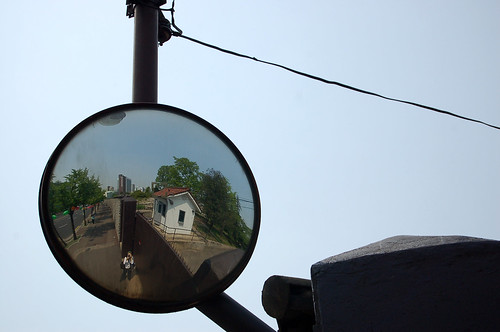 photo: framed world by youngdoo